Oven Repair · Denver
Wolf Oven Bakes Pale and Slow at 5,280 Feet: Fault or Altitude?
Half the ovens we are called to in Denver are accurate and the recipe is wrong for the elevation. Here is how to measure a real temperature drift, the three faults behind a genuinely cold cavity, and when calibration is the answer.
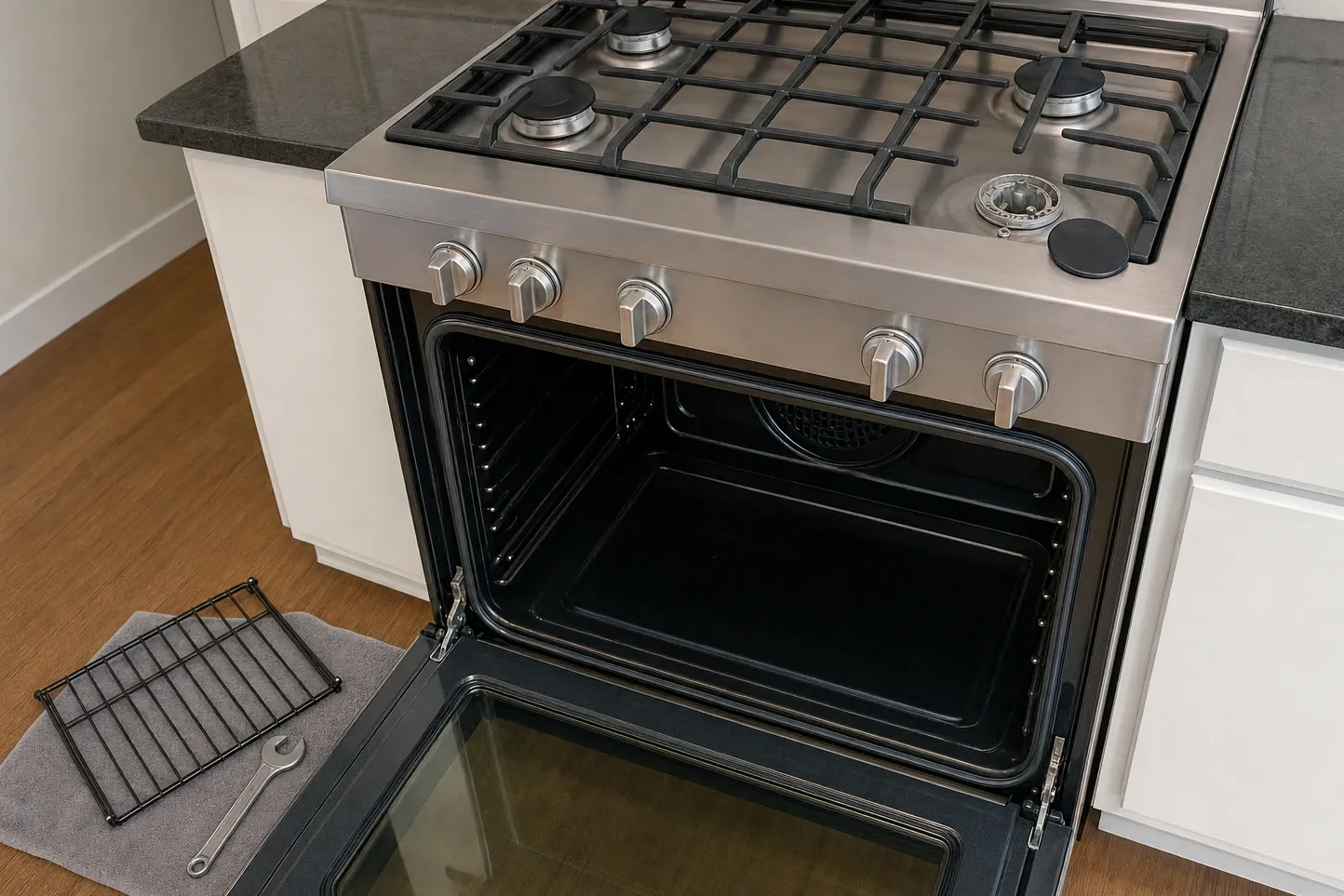
A Wolf wall oven that says 350 and bakes like something less than that is one of the two most common calls in this city. Roughly half the time the oven is within a few degrees of correct and Denver is doing the rest. The other half is a real fault, and the two are easy to separate with a thermometer and forty-five minutes.
Altitude is doing some of this
At 5,280 feet water boils at about 202°F rather than 212°F. Batters and doughs therefore lose moisture as steam earlier and at a lower temperature, gases in leavening expand further before the structure sets, and the crumb sets later than the recipe expects. The practical result on a cake, a loaf or a tray of biscuits is exactly what people describe as a cold oven: pale, slow, sometimes sunken in the middle.
None of that is a fault. It is why cookbooks carry high-altitude notes, and it is why a Denver oven that has never been recalibrated can produce a decade of adequate results and then look broken the first time somebody bakes from a sea-level recipe.
What altitude does not explain: a roast that will not brown, a cavity that takes an hour to reach setpoint, a fan that stops mid-bake, or a difference between the top and bottom of the oven. Those are machine problems.
How to tell a real drift from thin air
Do this before anything else, because it decides whether you need a technician at all.
- Put an oven thermometer on the middle rack, in the centre. Not hanging from a rack, not against the wall — both read the wall, not the air.
- Dial 350°F and let the preheat signal come and go.
- Now start a clock and give it forty-five more minutes. This is the part everybody skips. The cavity walls and the racks have to come up to temperature before the air stops swinging, and an oven read at the preheat beep will always look wrong.
- Read it without opening the door more than a crack, and read it twice, ten minutes apart.
Within about 15°F either way: the oven is fine, and a calibration offset will close the gap if you want it exact. Consistently 25°F or more low, in the same direction, on two readings: that is a drift worth diagnosing. Swinging 40°F up and down between readings: that is a control or sensor problem rather than a calibration one, and it is the more urgent of the two.
The three faults behind a genuinely cold oven
Three of them, listed the way the odds run — commonest at the top:
The oven sensor. A resistance sensor in the cavity tells the control what the temperature is; as it ages its readings walk away from reality. A technician compares its resistance against the manufacturer’s chart at a known temperature — that is a two-minute measurement and it either exonerates the sensor or condemns it. A sensor reading high makes the oven run cold, which is the direction most people notice.
The bake element or its supply. On an electric cavity, a partially failed element still glows and still gets warm without ever reaching setpoint. On a dual-fuel range the cooktop is gas and the oven is electric, so a perfectly working cooktop tells you nothing about the oven — but it does prove the gas supply is not the problem, which narrows the list usefully.
The convection blower. If the fan howls at startup and goes quiet mid-roast, the bearing is collapsing and the wheel is rubbing its shroud. The cavity then heats by radiation alone, unevenly, and the top of the oven runs hotter than the bottom. That fault announces itself by sound before it shows up in the baking.
Door, seal and hinge: the quiet one
The failure nobody suspects is the door. Hinge springs stretch over years of use; the door drops a millimetre or two at the top and stops sealing along the upper edge. Heat escapes over the handle, the cavity never quite holds, and the control compensates by running the element longer — so the oven is not inaccurate exactly, it is leaking.
Two checks, both from the front:
- Run a hand along the top edge of a closed hot oven door. Warm air moving over the handle is a seal or a hinge, not a sensor.
- Look at the gasket where it turns the corners. A flattened or split section there is the usual place it goes, and it is a straightforward part.
On a wall oven in a run of cabinetry this matters more than it sounds. A door that does not sit square puts uneven load on both hinges, and left long enough it takes the latch with it.
What a calibration actually changes
A calibration offset does not make an oven more accurate. It shifts the setpoint by a fixed number of degrees so that what the control believes matches what the cavity is doing. It is the right fix for a small, consistent, one-direction error in a healthy oven, and it is the wrong fix for anything that swings, anything that worsens, or anything with a fault code attached.
That is also why offsets should be set after the diagnosis rather than before. Dial 30 degrees of compensation into an oven whose sensor is drifting and you have hidden the symptom while the cause carries on moving.
When to call
Worth a visit rather than another test bake:
- 25°F or more of drift on two soaked readings in the same direction
- Readings that swing widely between two measurements ten minutes apart
- A fault code, a locked door, or a latch motor that buzzes
- A convection fan that howls, stops, or changes note during a bake
- Warm air moving over the top edge of a closed door
- A steam oven throwing a fill fault — in this city that is usually scale in the generator and the intake valve, and it wants descaling before it wants parts
Sensors, thermal fuses, hinge springs, door seals and blower assemblies ride on the van. A visit is a flat $89, and that fee buys the drive out and a diagnosis taken to the end — sensor resistance measured against the chart, a full preheat run out, and a thermometer left on the middle rack so you can watch it agree. Approve the repair and the $89 comes off it.
Follow-ups
How much drift is normal on a built-in oven?
Within about 15°F of setpoint after a proper soak is normal, and closing that last gap is exactly what a calibration offset exists for. Beyond roughly 25°F, consistently, in the same direction, on two readings ten minutes apart, is a fault worth diagnosing rather than dialling out and forgetting about.
Does convection make altitude baking better or worse?
Usually better, because moving air transfers heat into the food more effectively and shortens the bake, which matters here where batters set later than the recipe expects. What convection cannot do is correct a sensor that is reading low: it will simply circulate air that is at the wrong temperature more efficiently.
Should I just set the oven 25 degrees higher and live with it?
Only as a stopgap. If the cavity is genuinely cold the element or the sensor is working outside its range and the fault usually widens. Compensating also hides the difference between a slow oven and a leaking door, which are very different repairs.